Have you ever looked again at a photograph that once made you feel sad and discovered that it now evokes tenderness, gratitude or even joy?
The image remains the same. The people, objects, light and place are all the same. Yet something has changed in the way we look at it.
Perhaps we now have a better understanding of what happened, have gained some distance from that experience, or know something we didn’t know before.
Photographs have this ability to accompany us over time and offer us new ways of interpreting our own stories. An image can evoke very different emotions depending on who is looking at it, their experiences and the stage of life they are going through.
This relationship between what we perceive, how we interpret it and what we feel connects with a fundamental question in psychology: how do we regulate our emotions?
What do we know about how we regulate our emotions?
For a long time, part of neuroscience research has focused on identifying which regions of the brain are involved when we try to change our emotions.
One of the most widely studied strategies is cognitive reappraisal, which involves changing our interpretation of a situation in order to modify the emotional response we experience.
It’s not what happens to us, but how we experience what happens to us.
Imagine that our best friend hasn’t replied to our messages for several days.
We might interpret her silence as a sign of rejection and experience sadness, insecurity or anger. But we could also consider that she might be going through a difficult time, have many responsibilities or simply need some time for herself.
The situation remains the same, but our interpretation can transform how we feel.
This ability to reconsider the meaning of our experiences is one of the emotional regulation strategies explored through different psychological approaches.
However, is there only one way to regulate our emotions effectively? Can we identify this ability by observing activity in specific regions of the brain?
A study published in Nature, entitled Emotion regulation capacity lacks a shared neural signature, jointly analysed the results of 40 studies involving 2,175 participants.
Its findings challenge the idea that there is a universal pattern of brain activity that can identify who is better at regulating their emotions.
The researchers found that the measures used to study emotional regulation, such as brain activity, emotional experiences reported by participants and the habitual use of certain strategies, showed less consistent relationships than might have been expected.
This means that emotional regulation is a complex process that cannot easily be reduced to the activity of a specific region of the brain.
It also reminds us that we can use different strategies to relate to our emotions and that their effectiveness depends on numerous factors.
Although the research does not specifically study photography, its findings offer a thought-provoking starting point for reflecting on how images can help us explore our emotional experiences.
One photograph, many emotions
Imagine a photograph of an empty bench in a landscape.
For one person, it might represent loneliness. For another, the peacefulness of a sunset. Someone might remember a loved one who is no longer with them, while someone else might find a sense of rest and freedom in the image.
The photograph is the same, but the emotions it evokes are different.
Furthermore, these interpretations can change over time.
A photograph taken during a romantic breakup may initially evoke pain or nostalgia. Some time later, that same image may remind us of our ability to cope with difficult situations, the people who supported us or the decisions that allowed us to begin a new chapter in our lives.
What we have experienced will always remain part of our story, but we can discover new ways of understanding it.
In this sense, photography offers us an opportunity to observe how we construct the emotional meaning of what we look at.
We can ask ourselves what we feel when contemplating an image, what memories it evokes, what thoughts arise and which aspects of our own story are present in that interpretation.
And we can also ask ourselves another question: What other stories could this photograph tell me now or in the future?
Taking photographs to discover other ways of interpreting
When we take a photograph, we are constantly making decisions. We choose where to position ourselves, what to include within the frame, what to leave out, how far away to stand and when to press the shutter. Each of these decisions changes the image we create.
The same place can appear welcoming or unsettling depending on the light. An everyday object can take on a different meaning when we move closer to its details. A scene can be transformed when we observe it from another point of view.
This ability of photographic language to transform an image through framing, light, distance or point of view can become an interesting metaphor for our psychological processes.
Just as we can change the framing of a photograph, we can also explore different perspectives on our experiences.
It all depends on the point of view from which we look at things.
Think of someone going through a period of significant change who feels uncertain about the future. We could invite them to take a photograph that represents that uncertainty.
They might choose a path disappearing into the fog, railway tracks stretching towards the horizon or the largest tree in the park near their home.
We could then suggest that they look at the same situation from another perspective and take a second photograph. Perhaps they will discover a path that continues, some interestingly shaped stones or a small source of light.
The intention would be to explore other possible interpretations, broaden their perspective and recognise aspects of the experience that had initially remained outside their awareness.
This exercise can be related to cognitive reappraisal, as studied in psychology, although I would like to remind you that the research published in Nature does not directly demonstrate the effects of photographic activities on emotional regulation.
Here, photography is a creative resource that facilitates reflection and the exploration of new perspectives.
Self-portraiture: observing our emotions from a different perspective
Self-portraiture offers a particularly interesting possibility because it allows us to become both the person who creates the image and the person who observes it.
When we create a self-portrait, we can explore how we see ourselves, how we feel, which aspects of our identity we wish to show and even explore certain roles. We can also use it to represent emotions that we find difficult to express in words or that we struggle to tolerate.
Someone may decide to photograph themselves to represent their sadness, fear, joy or vulnerability. They can do this through body language, their gaze, light, objects, spaces or the relationship they establish with their surroundings, even without showing their body in the photograph.
Later, when observing the image, they may discover aspects of the experience they had not noticed when taking the photograph:
What emotion appears in this photograph?
What have I chosen to show?
What part of myself do I recognise in it?
How do I feel when observing myself from the outside?
These questions can open up a space for personal exploration. An emotion can have many nuances, and self-portraiture can help us recognise them.
Of course, the aim is not to create a beautiful image or to represent an emotion correctly, but rather to use photography to investigate and explore, with the aim of broadening our understanding of what we are experiencing.
Regulating our emotions can also mean learning to live with them
When we talk about emotional regulation, we often think about reducing sadness, controlling fear or making anger disappear. However, different psychological approaches, including Acceptance and Commitment Therapy (ACT), suggest that having a healthy relationship with our emotions also involves developing the ability to recognise them, accept them and respond flexibly.
Some unpleasant emotions are part of profoundly human experiences. These are emotions that we need to feel; experiencing them is healthy and normal.
We feel sadness when we lose someone important, fear when faced with uncertain situations or anger when we perceive an injustice. These emotions can provide us with information about our needs, our values and our relationship with the world around us.
That is why regulating an emotion does not always mean trying to reduce its intensity. In certain circumstances, it may be more helpful to acknowledge its presence, understand what is happening and decide how we want to act.
Photography can accompany us in this process. We can create an image that represents our emotional state without trying to transform it immediately.
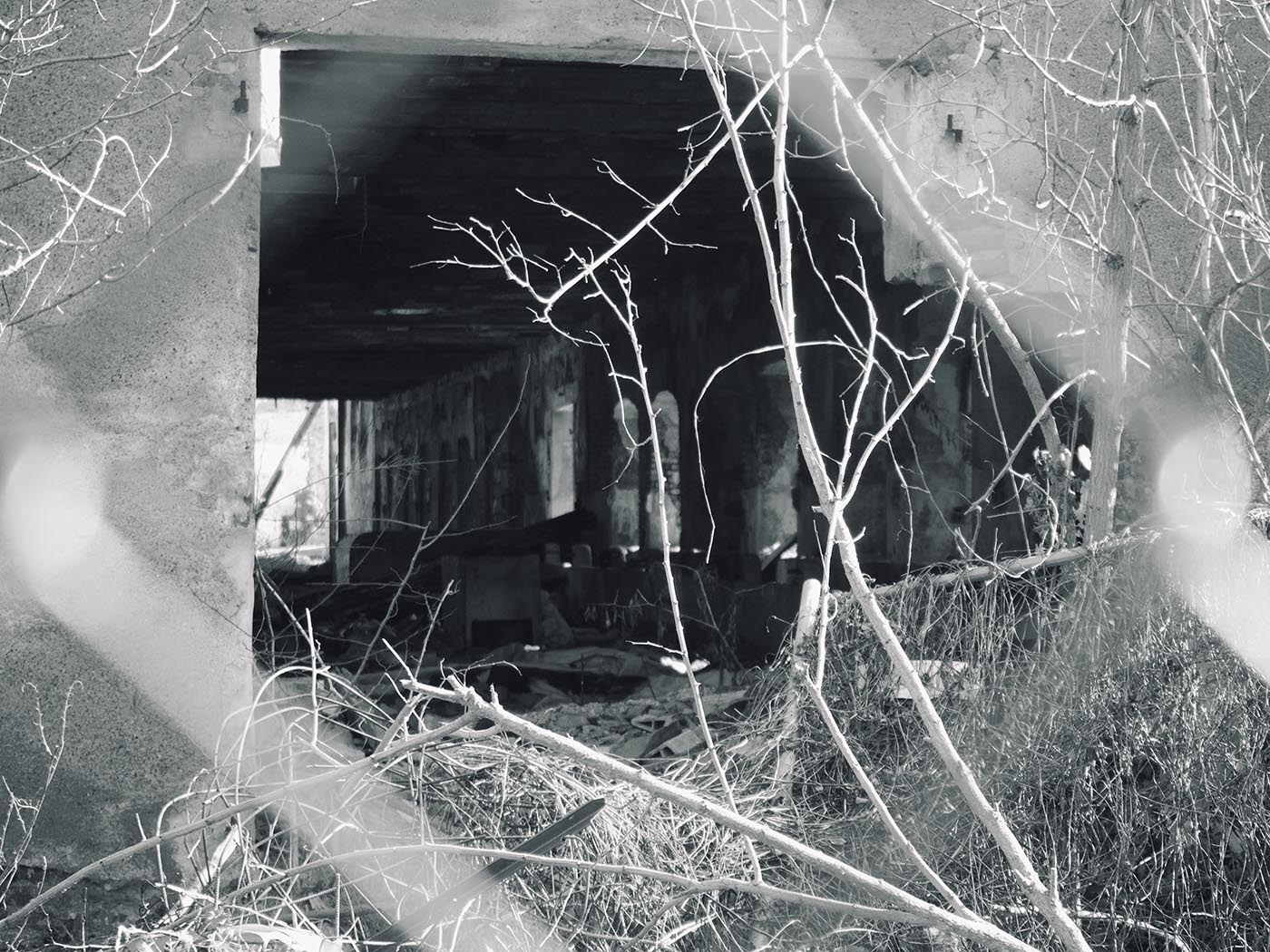
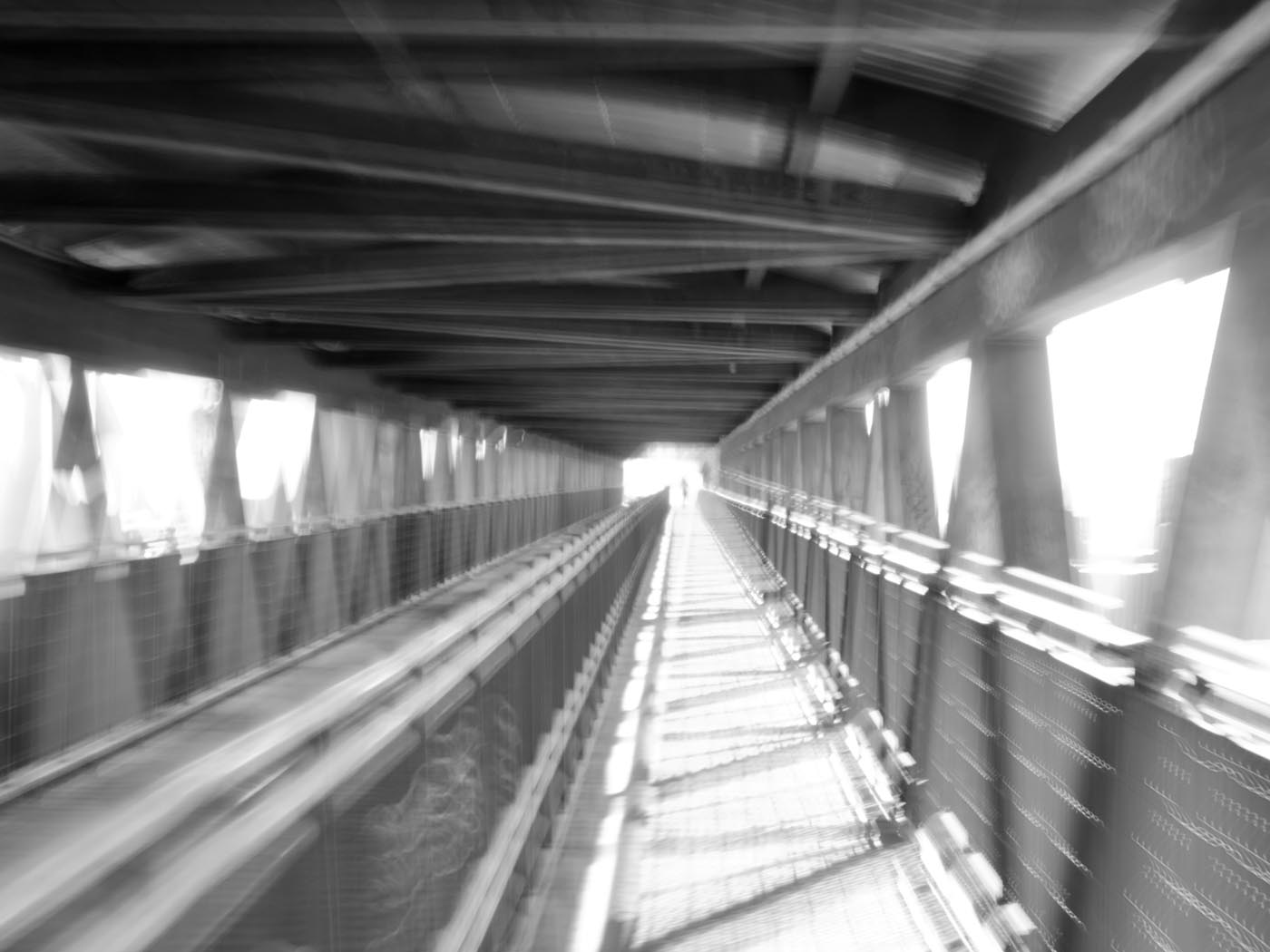
BREAKDOWN – Michael TenBrink
We can observe it with curiosity, recognise the sensations it evokes and ask ourselves what we need at that moment.
We may discover that we can feel sadness and, at the same time, experience gratitude. That we can feel afraid and still move forward. Or that a difficult emotion can coexist with other equally important emotions.
Photography can offer us a space to observe our emotions, recognise their complexity and discover new ways of relating to them.
A photographic exercise: one emotion, two perspectives
I’d like to suggest an exercise to explore the relationship between photography, interpretation and emotion. You can do it with your mobile phone or any camera. What matters is paying attention to your experience throughout the process.
First photograph. How do I feel?
Think of an emotion that is present in your life at this moment. It could be joy, uncertainty, sadness, excitement, nostalgia or any other emotion you would like to explore.
Look for an image that represents how you are experiencing it. It could be an object, a landscape, an everyday space, a shadow or a self-portrait.
Observe your photograph and reflect on the thoughts, emotions or memories that emerge from the image.
Second photograph. Can I look from another perspective?
You can widen the frame, change your position, move closer to a detail or photograph something completely different.
Reflect on the other meanings your emotion might have, which aspects have remained outside your awareness and what you might need in order to relate to that emotion differently.
Look at both photographs. Perhaps you will discover that the initial emotion remains, but that you can now recognise other nuances, interpretations or possible ways of responding.
It may also happen that your emotional experience does not change. That is part of the exercise: the aim is to explore and understand, without demanding a particular outcome from ourselves.
Learning to look is also learning to know ourselves
The research published in Nature reminds us that emotions and their regulation are part of complex and diverse processes that are deeply connected to our individual experiences.
Photography can offer us a way to approach this complexity through creativity, observation and reflection.
When we take photographs, we pay attention to certain aspects of the world. When we observe our images, we can discover what interests us, what moves us, what we remember and what meanings we attribute to our experiences.
At ANDANA, we are particularly interested in this relationship between the way we look and self-knowledge.
We see photography as an opportunity to explore our personal history, recognise our emotions and share different ways of understanding the world.
Scientific research helps us formulate new questions about these processes. Photographic practice offers us a creative space in which to explore them, although further studies are still needed to understand precisely how photography affects emotional regulation.
Our photographs speak about what we look at, but also about who we are when we look.
Photography offers us an opportunity to express our emotions: it invites us to discover that there are different ways of looking at them, understanding them and relating to them.
Hayes, S. C., Strosahl, K. D., & Wilson, K. G. (2012). Acceptance and Commitment Therapy: The Process and Practice of Mindful Change (2nd ed.). Guilford Press.
BREAKDOWN – Michael TenBrink. This project tells the story of a nervous breakdown that triggers an intense emotional reaction, including rage and despair, leading to a feeling of losing control. However, the photographer finds catharsis and release through a photographic session in abandoned spaces, which become a metaphor for his inner world.
Training opportunities that might interest you:
PHOTOGRAPHY TO GET TO KNOW YOURSELF
Photography to Get to Know Yourself is a pioneering, scientifically validated program that uses photography as a tool for personal reflection, creativity, and human development. It has been developed over more than ten years and enriched by the experience of thousands of participants from different countries.
Al citar, reconoces el trabajo original, evitas problemas de plagio y permites acceder a las fuentes originales para obtener más información o verificar datos. Asegúrate siempre de dar crédito y de citar de forma adecuada.
How to cite this article
By citing an article, you acknowledge the original work, avoid plagiarism issues, and allow access to the original sources for further information or data verification. Make sure to always give credit and cite appropriately.
Psychologist and teacher.With over two decades of expertise, Amparo studies and supports individuals who use photography to enhance their creativity and facilitate their personal growth. Through her work over the years, she has provided valuable information via articles, masterclasses, and courses covering topics that intersect photography and psychology and embarked on personal photography projects. In collaboration with Javier Sancho Boils, she has created ANDANAfoto. Since 2015, they have offered photography workshops with various organizations and platforms.She is the author of the books “Fotografía para crecer. Guía práctica para enseñar fotografía en la infancia y adolescencia (Photography to Grow: A Practical Guide for Teaching Photography to Children and Adolescents)” and “Descubre la fotografía. Mirar, crear y disfrutar desde la infancia (Discover Photography: Look, Enjoy, and Create from your Childhood)”.