Where Are We Looking From? Photography, Power and Representation


For decades, professionals in photography, psychology, education, and therapy have sensed something that anyone can experience when observing or creating a meaningful image: photographs have the power to move us, evoke memories, help us understand our personal story, and, at times, transform the way we relate to ourselves.
However, beyond intuition or personal experience, a fundamental question arises:
Is there scientific research that supports the use of photography as a tool for personal development and psychological well-being?
The answer is yes.
Although this is still an emerging field, in recent years systematic reviews, experimental studies, and academic research have begun to examine the potential of photography to foster reflection, emotional expression, identity development, and psychological well-being.
A Growing Field
Research on photography and well-being lies at the intersection of several disciplines:
This interdisciplinary nature means that research can be found under different terms: phototherapy, therapeutic photography, visual storytelling, participatory photography, Photovoice, or photography for personal development.
Although these approaches differ, they share a central idea:
Images help us interpret reality.
Phototherapy and Therapeutic Photography: Not Exactly the Same Thing
One of the most common sources of confusion is the distinction between these concepts.
Phototherapy generally refers to the use of photographs within a therapeutic process guided by professionals specifically trained in this approach. Images act as catalysts that facilitate access to memories, emotions, and meanings that may be difficult to express through words alone.
Therapeutic photography, on the other hand, is commonly used to describe photographic activities aimed at self-knowledge, personal reflection, or well-being without the need for a formal clinical intervention.
At ANDANAfoto, we feel particularly connected to this second approach: photography as a tool for observation, creativity, awareness, and personal growth.
The Most Comprehensive Scientific Review Published to Date
One of the most significant studies published in recent years is the systematic review Therapeutic Photography and Narrative Therapy, which analysed 47 studies conducted across a variety of settings and populations.
The authors identified particularly promising outcomes in areas such as:
The review concludes that the combination of images and personal storytelling can become a particularly valuable tool for supporting processes of reflection and psychological well-being.
You can learn more in our article: Scientific Evidence: Photography as a Tool for Personal Development.
Photography, Memory and Identity
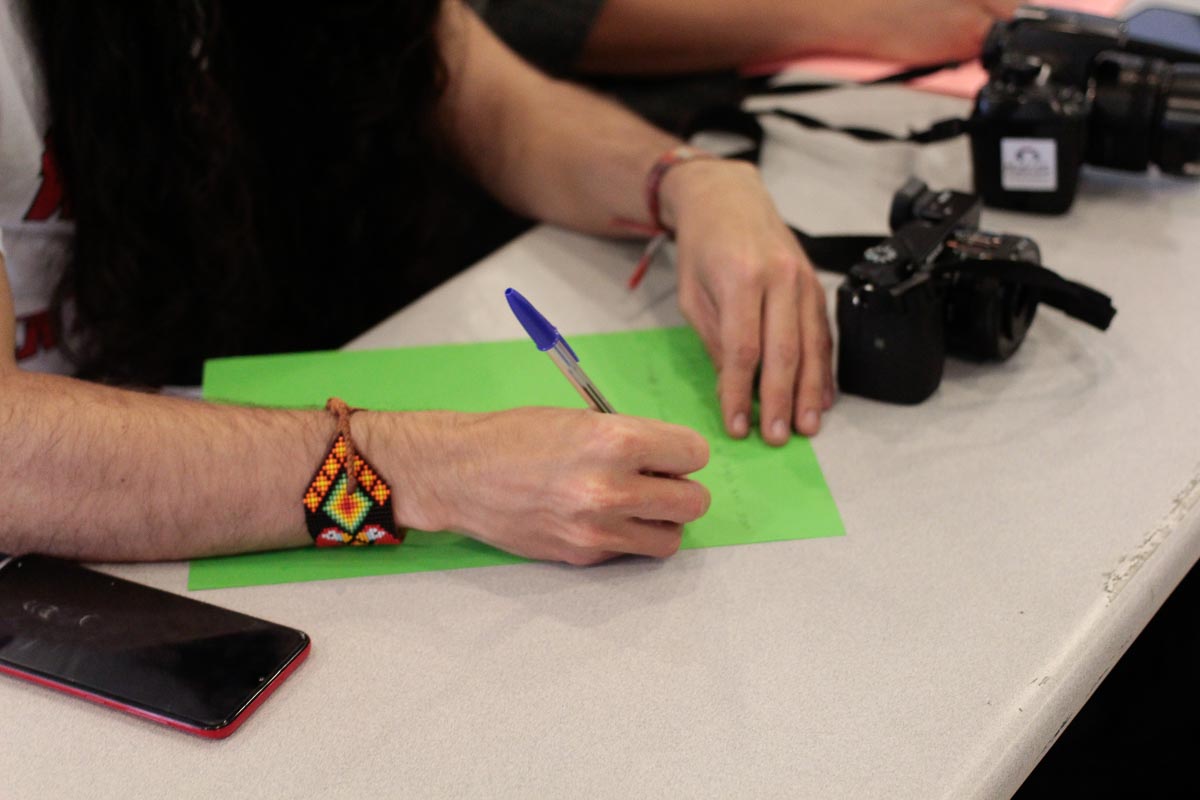
One of the most consistent areas of research focuses on the relationship between photography and memory.
Photographs function as autobiographical anchors. When we look at them, we do not simply recall events; we also reconnect with emotions, meanings, and the ways we interpret our own life story.
For this reason, many interventions use family albums, old photographs, or personal images to explore issues related to:
This line of research is closely connected to projects involving family albums, autobiographical photography, and self-portrait practices.
Photography and Psychological Well-Being
Another growing area of research examines the impact of photographic activities on psychological well-being.
Various studies suggest that engaging in photography mindfully can support:
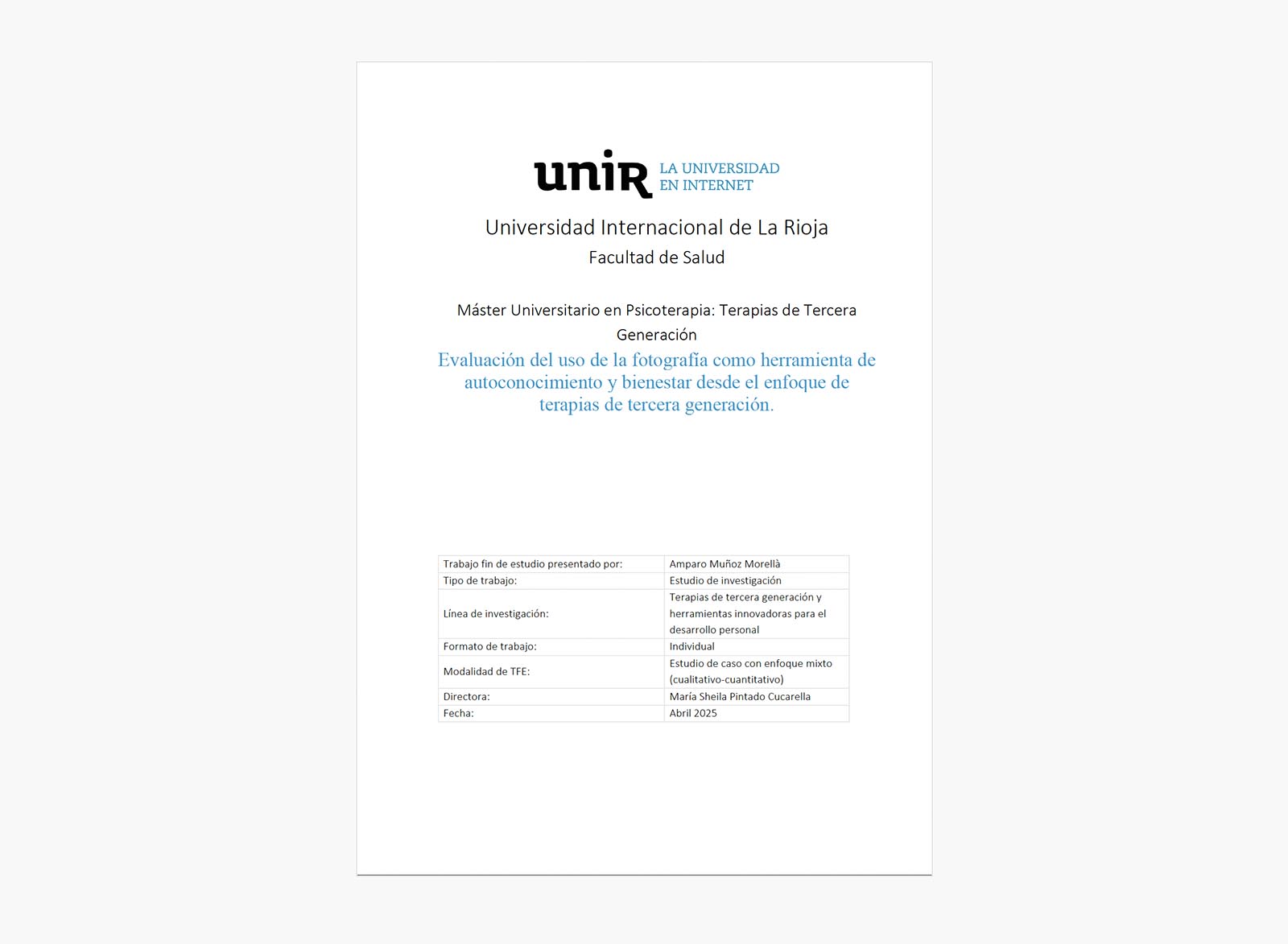
A recent study conducted with university students found that therapeutic photography interventions were highly valued by participants and supported processes of introspection and self-understanding, although quantitative outcomes still require further investigation.
These findings are particularly interesting because they reflect a common reality within this field: some personal transformations are deeply meaningful for those who experience them, even if they remain difficult to measure through traditional questionnaires.
Photography as a Mindfulness Practice
The relationship between photography and mindfulness is receiving increasing attention from researchers. Practising photography consciously involves slowing down, observing, and connecting with the present experience—qualities that share many similarities with mindfulness practices.
In recent years, studies have also explored the connection between artistic practices and mindfulness.
When we photograph with intention and calm:
It is no coincidence that many people describe the photographic experience as a form of active meditation.
This connection forms the foundation of many of the approaches we develop at ANDANA and explore through our articles and training programmes:
Photography and Mindfulness
Photography to Get to Know Yourself
Self-Portrait
In this sense, photography can become an accessible gateway to states of mindful awareness and presence.
What We Are Investigating at ANDANA
For many years, we have been developing programmes that use photography as a tool for personal development, creativity, and well-being.
Recently, we have compiled part of the existing scientific evidence in these two articles:
Photography as a Psychological Tool Based on Scientific Evidence
Scientific Evidence: Photography as a Tool for Personal Development
In these articles, we explore recent research, relevant psychological models, and practical applications that help explain why photography can become such a powerful tool for self-discovery and for deepening our relationship with the world around us.
In addition, we continue to investigate the relationship between photography, mindfulness, psychological flexibility, self-esteem, and subjective well-being through a range of educational and academic projects.
A Field with a Promising Future
Research into therapeutic photography is still growing.
We need more longitudinal studies, larger sample sizes, and methodologies that allow us to better understand the transformative processes that many people describe when working with images.
At the same time, there is increasing evidence that photography is not merely a way of recording reality. It can also become a tool for observing ourselves, understanding our experiences, and developing new ways of relating to our lives.
Do You Know of Any Research on Therapeutic Photography?
We are building a repository of studies, articles, and experiences related to therapeutic photography, photography for personal development, mindfulness, and visual storytelling.
If you know of any research, doctoral thesis, academic article, or interesting project, we would love for you to share it in the comments.
We will be delighted to read it, include it in future reviews, and continue expanding our collective understanding of the transformative potential of photography.
Cómo citar este artículo
Al citar, reconoces el trabajo original, evitas problemas de plagio y permites acceder a las fuentes originales para obtener más información o verificar datos. Asegúrate siempre de dar crédito y de citar de forma adecuada.
How to cite this article
By citing an article, you acknowledge the original work, avoid plagiarism issues, and allow access to the original sources for further information or data verification. Make sure to always give credit and cite appropriately.
If you’d like to learn more about photography and personal development, I invite you to explore: