


Because double is the vision that my eyes see,
and double is the vision that is always with me.
With my inner eye, he is an old and gray man, but
with my outer eye, I see a thistle in the middle of my way.Saving The Appearances. A Study in Idolatry. Owen Barfield
With these words, Owen Barfield emphasized that the world we see will never be truly objective; it will always depend on our own perception, which is linked to the evolution of our consciousness. Photography is perception, a tool that can show the world, make it visible, and transform it. A photograph is crafted from the artist’s gaze—a unique and personal perspective, authentic even if unintentionally so, emerging from both subjectivity and truth.
It’s fascinating how creative power bursts forth in the face of life’s pivotal changes and how people transform over time and create new worlds in response to adversity. This is why I’m thrilled to write about this artist: Inma García Peris, with whom I’ve shared school, a neighborhood, friendships, a workspace, and even a fine.
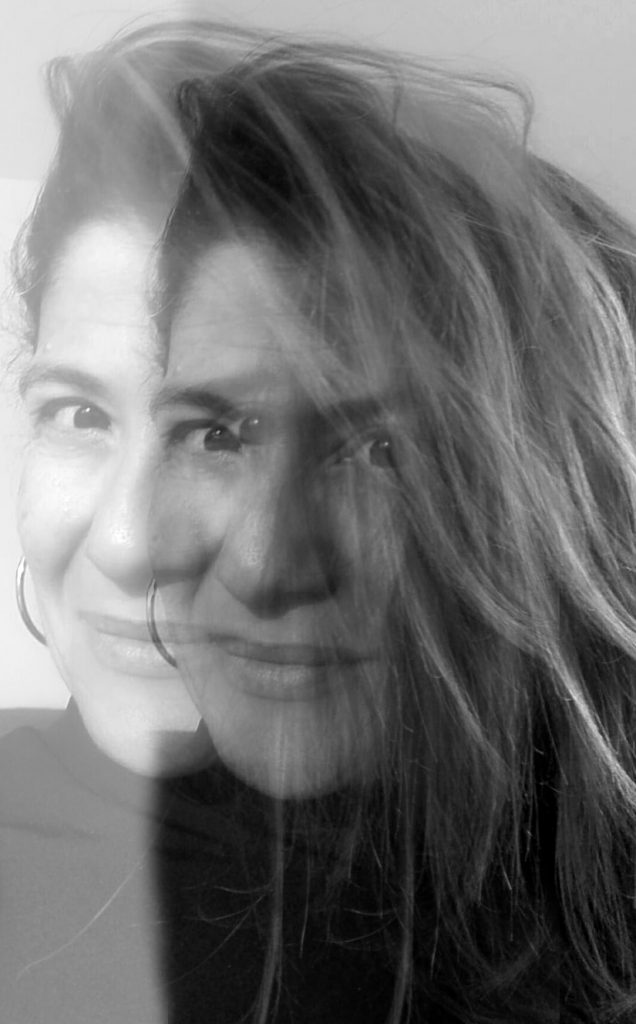
Since the age of sixteen, Inma García has dealt with a vision condition called diplopia, or double vision. This unsettling phenomenon can be frightening for those who experience it. Diplopia is a visual condition that causes the perception of two images of the same object. Depending on how the images overlap, it can occur horizontally, vertically, or diagonally.
Opening our eyes and seeing a single, three-dimensional image is something we often take for granted. This process requires the precise coordination of several components of the visual system: the cornea, the lens, the eye muscles that enable focusing, the optic nerve, and the brain. Diplopia splits life into two.
At 16, after two surgeries within three months for retinal detachment in both eyes, I stopped seeing the world as it was and began seeing it doubled, distorted, and blurred.
I began to live my different reality by hiding it from everyone, including myself.
My studies, training in the US, 14 years as a high school teacher, and even my relationships with others were all managed while hiding this small detail, which gradually became too overwhelming and caused collateral damage. Maximum visual stress, possibly caused by fluid in the macula of my right eye, led to distorted vision, combined with other visual pathologies, constant vertigo, and instability when walking.
My body was tense in places I didn’t even know could tense up, like my jaw. Lacking stability due to my vision, my body tries to compensate by finding strategies to avoid falling, which leads to stress and, ultimately, muscle tension.
In mid-2015, after the last surgery on both eyes, I was given a title I hadn’t prepared for: “incapable of performing my usual profession.” I had been trying to convince the medical inspectors to give me a little more time, but the ophthalmologists’ reports enunciated a series of visual problems that were incompatible with optimally carrying out my professional tasks. Who did I want to deceive? Everyone, as always.
I had to start living with my new situation. I sought the help of a psychologist, went through the necessary grieving process, and cried. I started questioning a lot of things and looking for meaning.
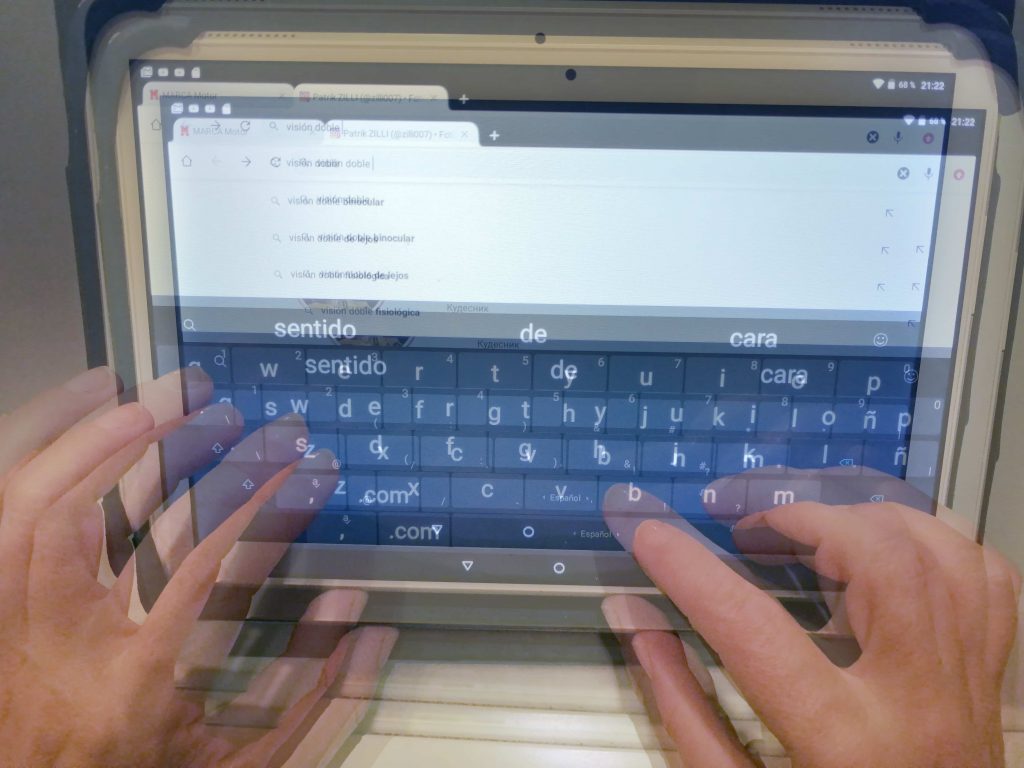
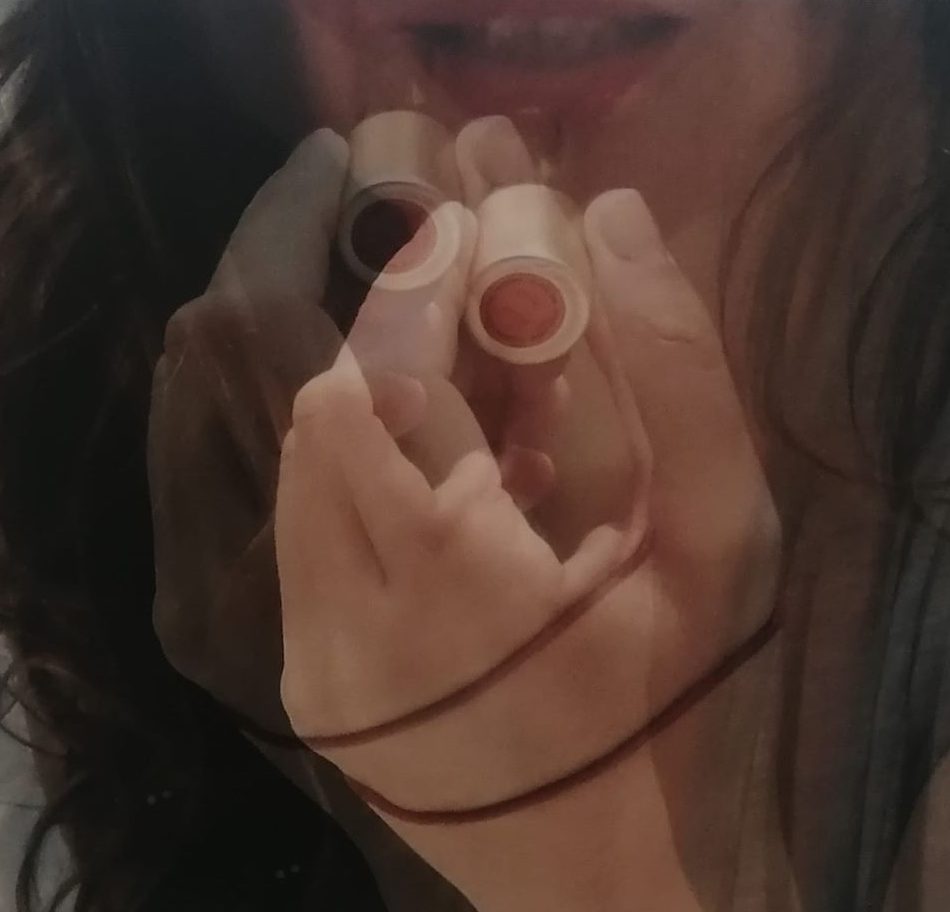

One of this artist’s many reinventions was learning to see the world from a new perspective: the doubled world. After a period of uncertainty and doubt, she realized that she loved communicating through words. Soon, she discovered a paradox—the image, with photography as her tool, would become the best way to tell stories and create transformation.
The Double Expo was born from a series of photos I use to share my story and show what my double vision indeed looks like. One day, I showed the pictures to Amparo Muñoz Morella, and she recommended that I show them in an exhibition project. She introduced me to Paco and María from Estudio Paco Mora, who supported my project idea. I think they’re a little crazy. They make me the happiest woman in the world without even realizing it. From that moment on, enthusiasm and excitement went hand in hand, along with the renewed belief that I can do things to change the world.

The images in this project capture the author’s daily life—when she leaves home, heads to the station, puts on lipstick, or walks down the street. Her photographs depict a fragmented reality, leaving the viewer disoriented and in a state of unease. The chaos and profound anxieties that German Romanticism referred to as Doppelgänger, a term coined by Jean-Paul Richter in 1776. It is a self-other, a personal double that is both autonomous and fantastical, creating a sense of unease and disturbance. An unfolding of the identity, shadow, and reflection of our self with its own autonomy.
What might feel unsettling to those observing is, for Inma García, an act of double reconciliation—with her new way of seeing and her new way of living. The doubles in this author’s work tell their own story while documenting the everyday lives of a wide range of people.
The exhibition represents my life, my day-to-day, but it goes beyond that. It expresses and reveals everything I’ve hidden, denied, and fought against. Today, I no longer fight against it. I collaborate with my double vision—my diplopia is my driving force to normalize my invisible disability and, through it, embrace all other different realities.
I believe we must make ourselves visible in order to normalize our experiences and achieve true inclusion. I have butterflies in my stomach again, just like when I was preparing an activity with my students, like that poetry recital. Today, my Project Double is a reality, and I would love to reach as many people as possible—especially those who need to know that there are many different realities, and theirs is just one of them. They can move forward and achieve great things.
Today, Inma García Peris is an artist who tells her story through her own life experiences, sharing an identity with other diverse realities. Her narrative is essential to understanding her work—it is real, authentic, and transformative, both for herself and for those who witness it.
“Goodbye,” said the fox. “Here is my secret. It is very simple: One sees clearly only with the heart. What is essential is invisible to the eye.”
“What is essential is invisible to the eye.” The little prince repeats this wisdom to himself,
ensuring he remembers it.
“Double” Exhibition”

Cómo citar este artículo
Al citar, reconoces el trabajo original, evitas problemas de plagio y permites acceder a las fuentes originales para obtener más información o verificar datos. Asegúrate siempre de dar crédito y de citar de forma adecuada.
How to cite this article
By citing an article, you acknowledge the original work, avoid plagiarism issues, and allow access to the original sources for further information or data verification. Make sure to always give credit and cite appropriately.
Amparo Muñoz Morellà. (March 4, 2020). "Double Is the Vision My Eyes See". ANDANAfoto.com. | https://andanafoto.com/en/double-is-the-vision-my-eyes-see/.