
– This photograph squeaks at me. There’s something I don’t know whether I like or not.
That photograph has created cognitive friction within you.

William Klein, Nueva York (1954-55)
Perception is the cognitive process through which we receive information and form an image of reality. When we perceive a photograph, we go through two phases: reception and interpretation. The first is a physical process, while the second is directly influenced by personal factors such as cognitive abilities, emotions, projections, beliefs, the author or origin of the photograph, and visual culture.
Therefore, when viewing the same photograph, each person’s perception can vary significantly; this is known as perceptual relativity.
Humans tend to interpret what we see as being in alignment with our belief system. Each time we look at something, we create an individual interpretation, leading us to overemphasize certain stimuli while overlooking others. That is why, if the keys are not in their usual place, we can’t find them.
It could also be the case that we encounter photographs depicting situations entirely new to us or that conflict with our belief system—challenging our ideas of what a good photograph is, what it should express, or what should and should not appear in it. Those photographs create cognitive friction.

Juan José Reyes, promoter of the Miami Street Photography Festival, argues that the greater the cognitive friction, the harder it is to understand and accept a photograph. However, this challenge makes the image more enduring, leaving a deeper emotional imprint:
“If an image has high cognitive friction, it means that it cannot be understood just by being seen. The mind has to work to understand it, and emotions will change depending on the different internal factors, which always change.”
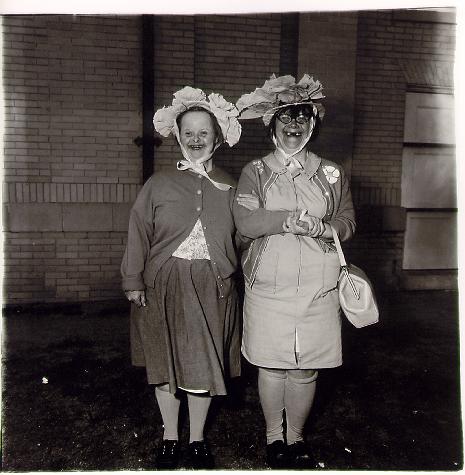
Diane Arbus
The person who perceives (looks) is passive, merely receiving external stimuli and later analyzing their interpretation. If it fits their framework, everything is fine.
Cognitive friction inevitably leads to cognitive dissonance, a psychological term referring to the internal tension and disharmony within a person’s system of ideas, beliefs, and emotions when they experience a conflict that can have an impact on their attitudes.
Leon Festinger’s theory of cognitive dissonance states that when this incongruity occurs, a person is automatically motivated to generate new ideas and beliefs to reduce tension, striving for internal coherence until their ideas and attitudes align.
In this sense, photographs that do not create cognitive friction pass “without trouble or fanfare.” The less friction, the quicker the perception, making it easier to see the image and feel satisfied with the “beautiful” result.
But is that what we want?
The constant in Sebastião Salgado‘s photographs is cognitive friction. His photos squeak and are provocative.
Diane Arbus‘s photographs are striking; they scream. These images create significant cognitive friction, where their purpose is not to be beautiful but to unravel darkness and mystery.
William Klein, the transgressor, was himself a source of friction. His images, full of pure rebellion, were only understood later.
Gillian Wearing explores a concept of family that can be painful.
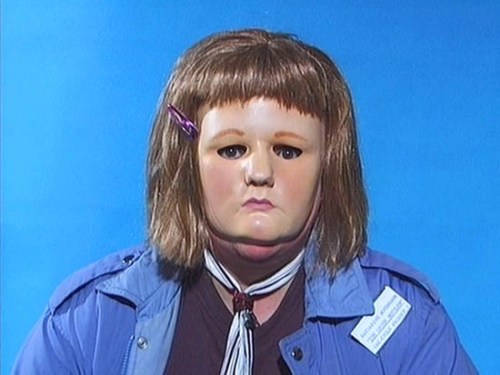
Gillian Wearing
When you see a photograph that causes cognitive friction again, question yourself and look at it again. You may discover many things you did not know about life and yourself.
Cognitive friction can make a photograph difficult to look at or understand. But this friction enables art to fulfill its crucial role of questioning the world.
If you want to learn more about photography and personal development, I invite you to learn more about.