


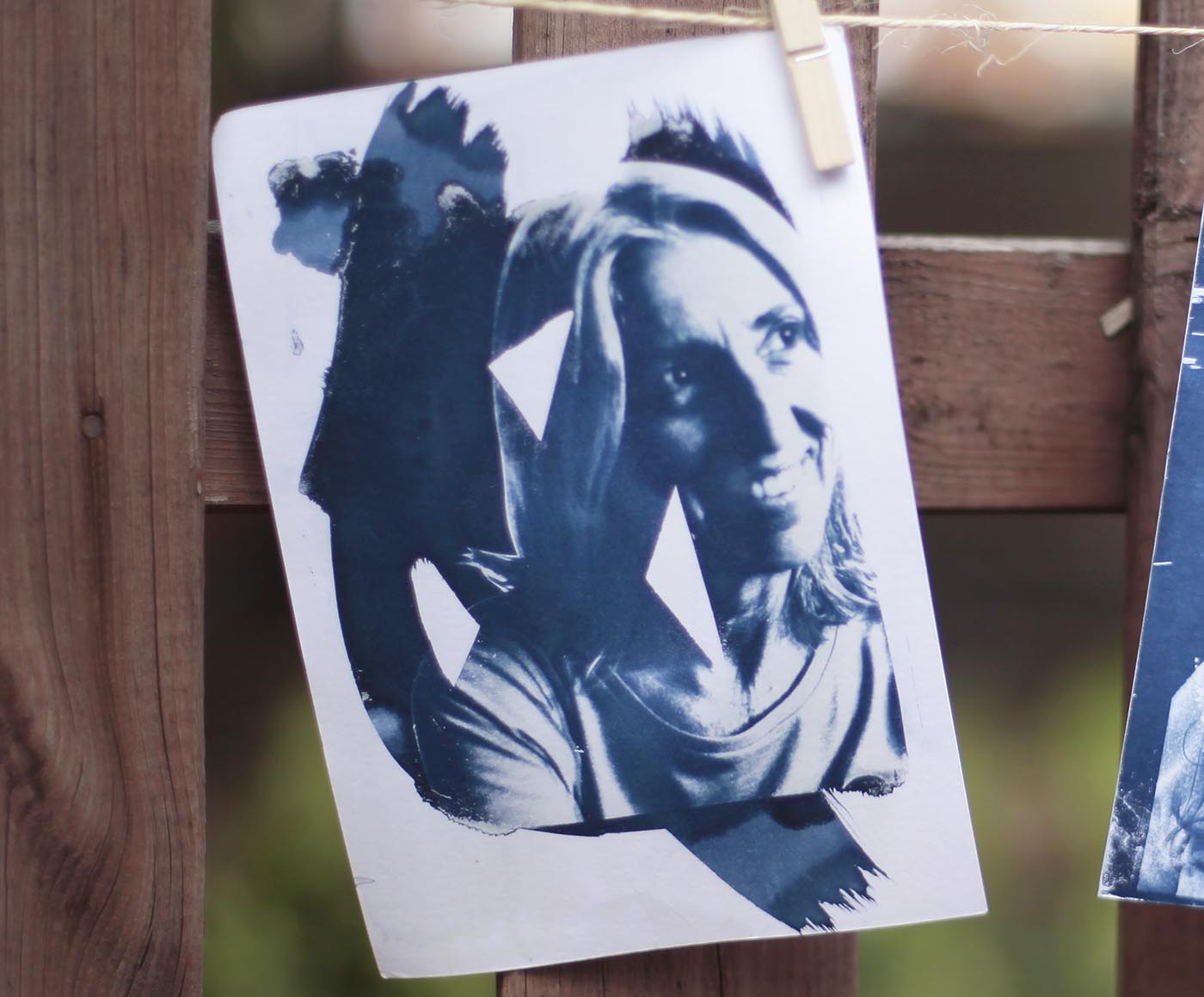
Create new connections between your ideas and discover alternative photographic processes to achieve original and unexpected results that have yet to be created.
Create new connections between your ideas and discover alternative photographic processes to achieve original and unexpected results that have yet to be created.
Start: October 13, 2026.
Third edition.
Workshop taught in English.
CREATIVITY is an intrinsic quality of being human; to be human is to be creative. It is not just a gift reserved for artists; everyone has the capacity to be creative in almost every aspect of life. Saying “I’m not creative” simply doesn’t hold true. I want you to understand that you are a creative person and how you can enhance this ability.
In this training, we invite you to work with your hands, connecting your ideas with experimental techniques to create unique pieces or develop new digital projects.
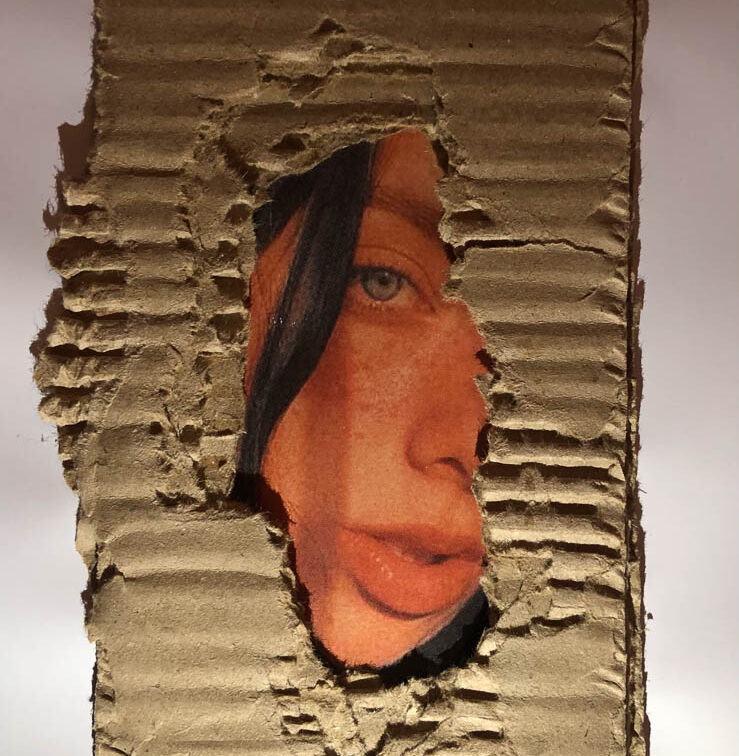
The goal is to experiment with photography, build your own camera, manipulate images, and alter materials to achieve original results that haven’t been explored before.
Creative experimentation with ideas, processes, objects, or words is a powerful tool for creation and self-knowledge, and it strengthens our natural ability to think creatively.
With a theoretical foundation rooted in psychology and the creative processes of experimental and contemporary art, you’ll receive audio content, activity guides, visual culture references, artists, music, and an experimental creative proposal every two days, with each session offering a new focus.
A total of 15 “creations.” Reading, listening to, and enjoying each session’s materials takes about 15–20 minutes. Once you receive the materials, you decide when to go through them and when to work on the suggested activities.
You’ll learn the physical and chemical principles of photography by working hands-on with photographic processes. You’ll use techniques such as camera obscura, chlorotype, photo embroidery, and cyanotype, among others, and explore how photography, painting, and sculpture are connected.

Techniques
- 1. INTRO – WHEN LIGHT EMERGES. Connect ideas and build a camera obscura using either a room or a shoebox.
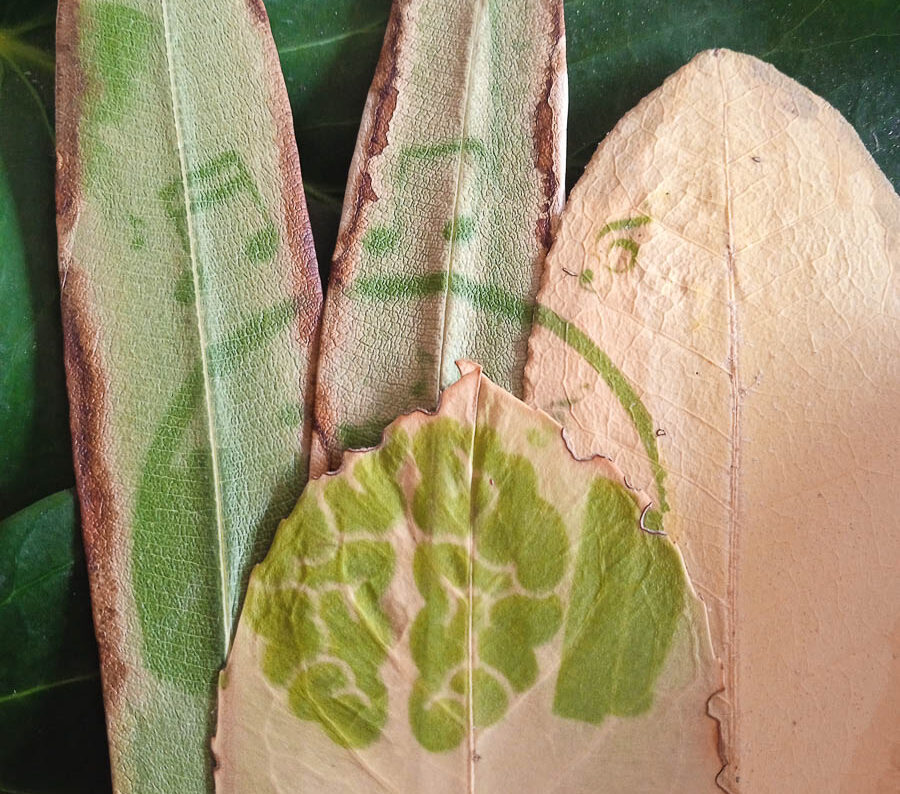
- 2. LEAVES. Chlorotype: Photographs on plant leaves.
- 3. SCULPTURES. Create three-dimensional sculptures with your photographs.
- 4. STONES. Transfer an image onto an object.
- 5. COOKING. Pinhole photography.
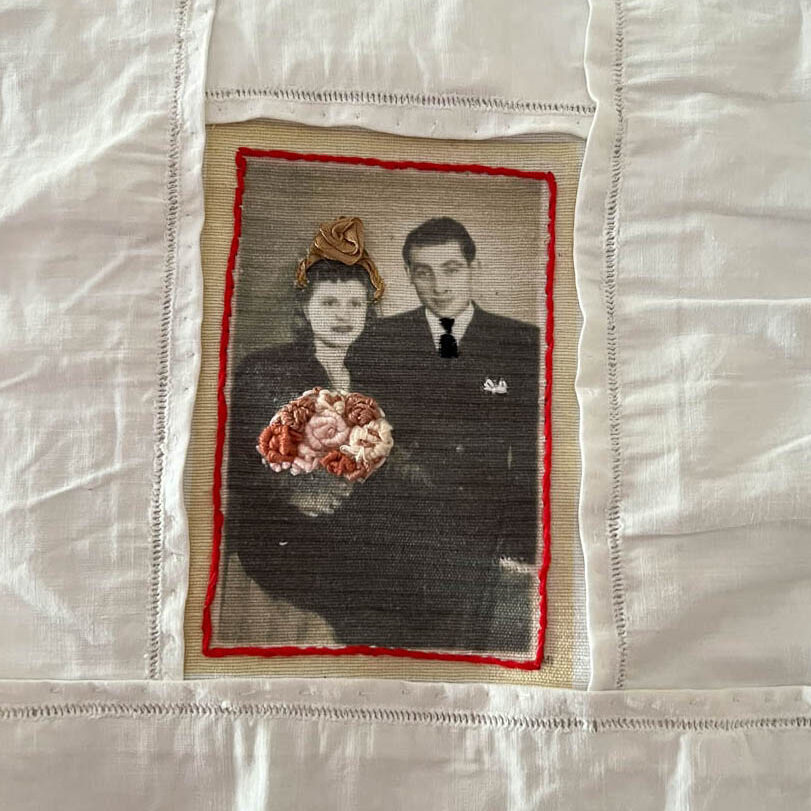
- 6. EMBROIDERY. Photo embroidery.
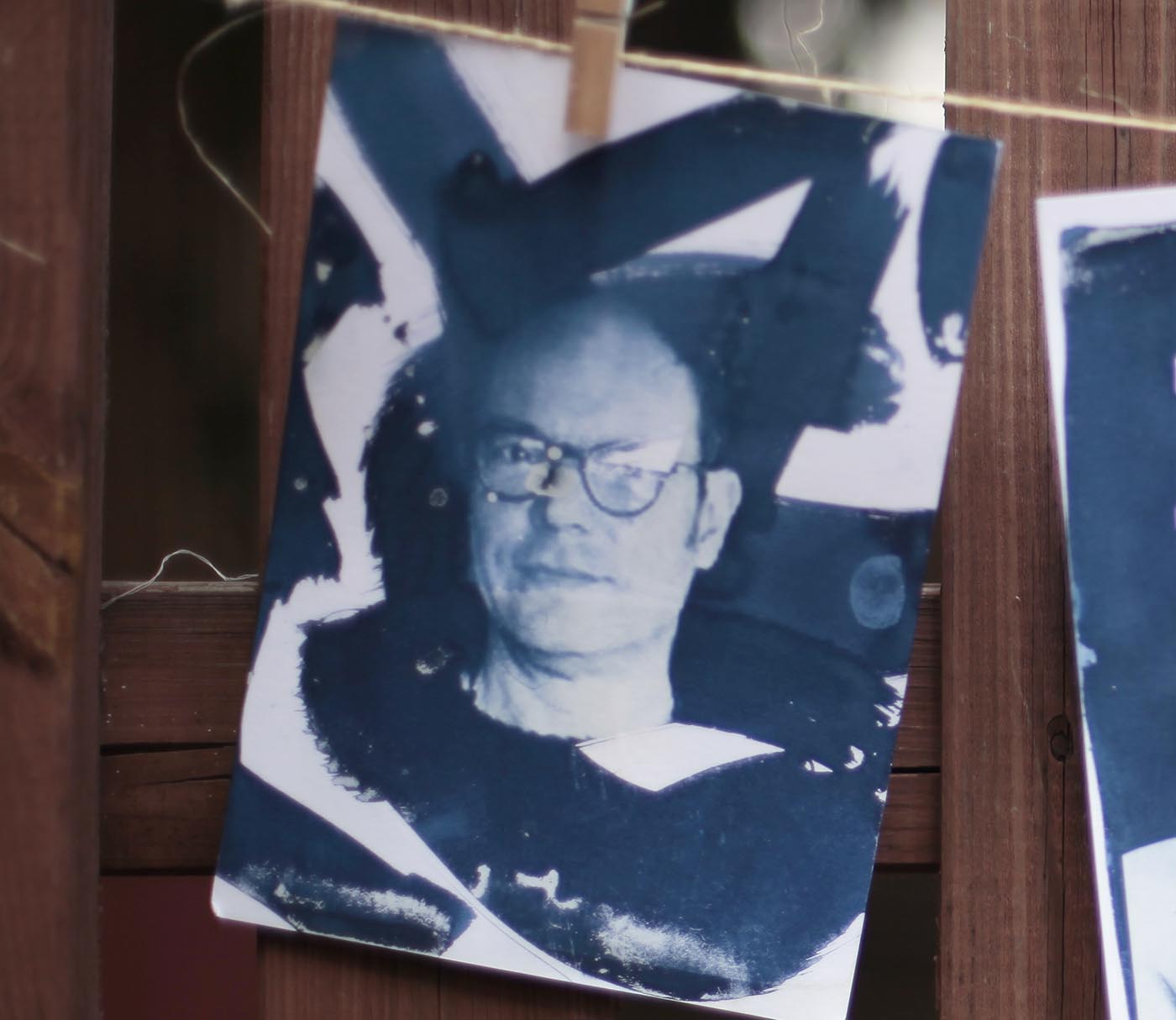
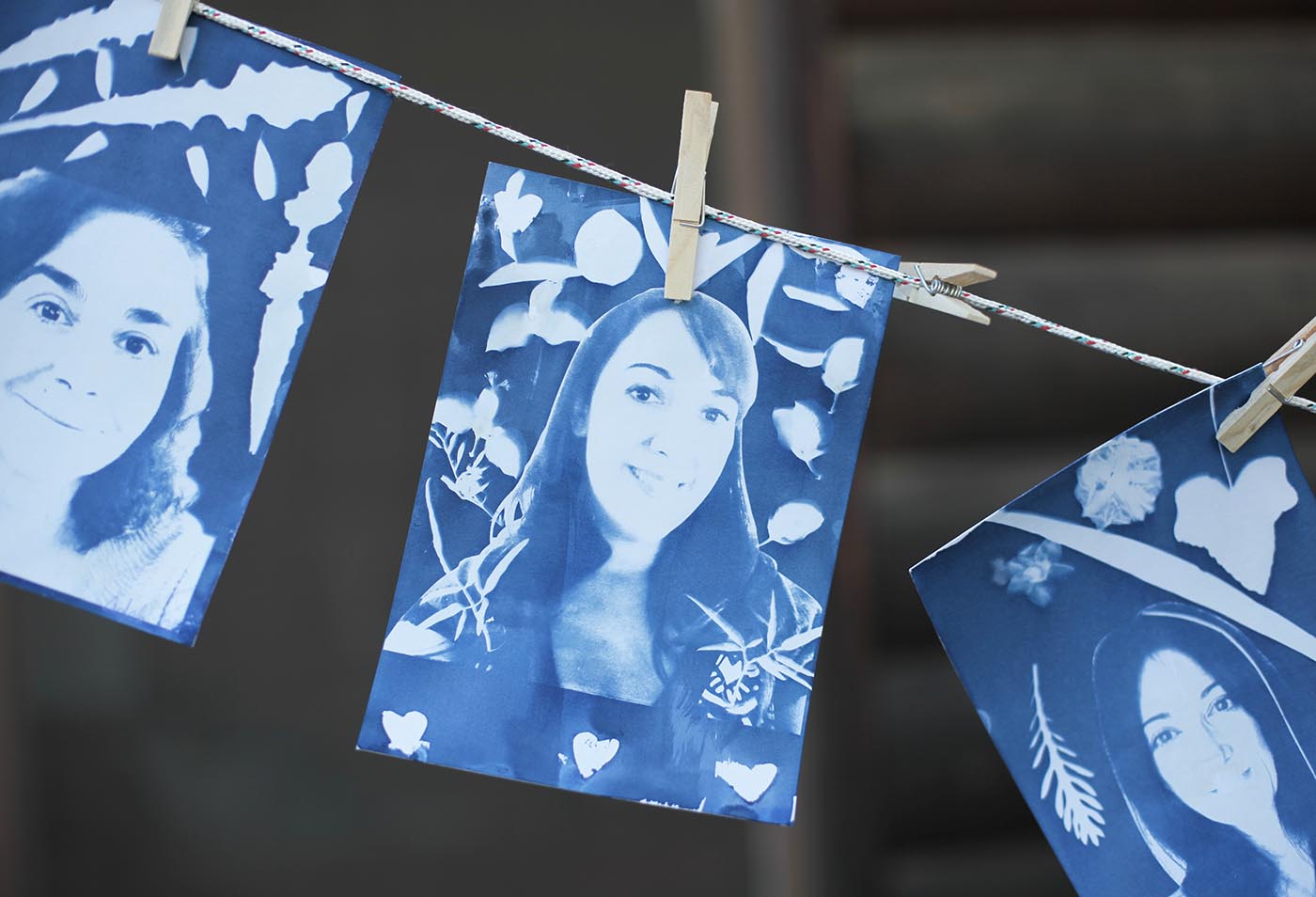
- 7. CYANOTYPE.
- 8. PAINTING AND PHOTOGRAPHY. Connect painting and photography.
- 9. LYING. Create your story through the viewfinder of an old camera.
- 10. WALKING. Cliché-Verre.
- 11. WEARING IMAGES. Photographs on fabric using cyanotype.
- 12. ANALOG DEVELOPMENT. Develop photographs using silver salts.
- 13. INVISIBLE LIGHT. Make the invisible visible.
- 14. TIME. Alter your printed photographs.
- 15. YOUR BOX. Connect writing with photography.
You can find the list of required materials in the Frequently Asked Questions.

Who Is This Training For?
- This training is for those who want to enjoy a different, transformative experience, using creative techniques and alternative photographic processes as tools for exploration and personal development.
- This training is for you if you’re looking for resources to expand your creative potential in photography while also exploring your artistic expression in other disciplines, such as writing and painting.

How it Works
- Click on the “Sign Up” button to complete your registration.
- You’ll get a confirmation email with immediate access to the first content (check your spam folder if you don’t see it).
- Starting on the designated day, you will receive emails with links to the new content.
- Access all materials on the training platform anytime.
- Ask questions or share suggestions in the platform’s support section.
- Want to give this experience as a gift? You can buy a gift card with a personalized message delivered on the date you choose or print it out to give in person.
“Associating seemingly unrelated elements in a novel way, by discovering a new connection between them, is the backbone of creativity”
Michael Michalko
Author of Creative Thinking
Author of Creative Thinking
About the Instructor

Javier Sancho Boils.
Photographer and educator. Co-director of ANDANA and creator of this experience.
Since 2015, Javier Sancho Boils and Amparo Muñoz Morellà have researched photography and supported people in using it strategically to expand their creativity and as a tool for personal growth. He also teaches courses and delivers lectures on how photography boosts creativity, enhances brand image, and increases online visibility for a wide range of organizations and institutions.
Javier actively shares his expertise by writing articles and leading masterclasses and courses on creativity, photography, and branding. He is the author of the books Fotografía mejor para vender más (Take Better Photos to Sell More), Descubre la fotografía. Mirar, crear y disfrutar desde la infancia (Discover Photography: Look, Enjoy, and Create from Childhood), You Are What You Look At, and Photography to Get to Know Yourself. Origin.
Learn more about his work, lectures, courses, and workshops at javiersanchoboils.com

Featuring the participation and voice of Amparo Muñoz Morellà.
Psychologist, educator, and researcher in photography and personal development. Co-director of ANDANA.
Communicator with over 20 years of experience in community intervention and social integration through artistic tools. Her work focuses on exploring photography as a strategy to boost creativity, foster self-knowledge, and improve emotional well-being.
Through specialized training in Mindfulness for Children and Adults and a Master’s Degree in Psychotherapy: Third-Generation Therapies, she has developed this innovative methodology that combines mindfulness and photography to foster introspection, authenticity, and personal transformation. Her work as a communicator extends through articles, courses, and masterclasses on the connection between psychology and the image.
In collaboration with Javier Sancho Boils, Amparo founded ANDANA, a project that combines photography and personal development. Since 2015, they have been leading workshops that use photography as a tool for personal and social development for various organizations and government entities.
What People Have to Say About This Experience

@anica_canica
I loved it. It radiates love, attention to detail, good taste, passion for what you do, originality, and authenticity. It gave me a real surge of creativity and truly felt like a gift. Thank you for sharing it with us. You’re awesome. Thank you so much. You’ve helped me discover things I know will stay with me forever. I’m so happy I took another training with you, and I’ll definitely be back for more!!!
@rosioaristizabal
It was an excellent process. Coming from an accounting background, I was used to thinking inside the box, with my mind full of rules and regulations. This experience gave me permission to create and reconnect with ideas that had been dormant for a long time. I feel endless gratitude for these learning spaces. They’re practical, enjoyable, and helped me realize that life, and every moment within it, is unique and ephemeral. Every moment is a treasure.
@Testasecca
I have greatly enjoyed ANDANA’s training in creative and experimental photography, as it has allowed me to discover new artists and their work, learn new techniques, connect with each of them, and resonate more deeply with some. Clearly, these are personal experiences that bring us closer to who we are, to what we like or dislike, helping us connect more with some creations than others, to connect, to feel, to disagree, to generate emotions, and to broaden our way of seeing.
@maribel.herrero.31
I find it really interesting to discover new techniques, inspiring artists, and valuable insights. You’re doing an excellent job. Thank you for this precious gift.
@smilecolours1
I found it very complete and dynamic. In addition to learning new techniques, you also get to discover the work of different artists, which is truly inspiring. I highly recommend it!
@gladelys_bermudez
I found it really interesting. The sculpture experience completely ignited my creativity.
@marielazaltz
I loved it! It’s truly different and invites you to reflect on the beauty of the imperfections we create!! Thank you. Beyond what I learned, I’m taking away the connections I made with fellow participants along the way.
@erikaariasphotographer
I really wanted to learn new photography techniques to experiment and grow in my artistic practice, and you made it incredibly accessible with all the information and inspiration I needed to move forward.
@Testasecca
The course allows you to interact with other people on Instagram if you wish—people from all over the world, from diverse cultures and contexts, with different perspectives on life and ways of seeing; this has a far-reaching impact and enables you to observe the works and creations of other people and artists, enriching your own gaze and convictions. Thank you!









Get Your Certificate
Receive a total of 15 Creations

Be Part of Our Community

Lifetime Access to the Content

Platform Available 24/7
Price
The full workshop for a one-time payment.
Special price for the first edition only
US$50
Start: October 13, 2026 – Registration is open until October 12 or when all spots are gone.

100% transparent and secure one-time payment
Gift This Online Workshop
Purchase a gift card with a personalized message delivered by email on the date of your choice. You can also print out the gift card and give it in person.
FAQs
What techniques will I learn, and what materials do I need?
Most of the materials and resources are easy to find, and many can be found without even leaving home. Here’s what you’ll need:
Introduction > Connecting Ideas: A camera or a mobile phone.
1-When Light Emerges > Camera obscura: Digital camera or mobile phone, a room, pieces of cardboard, poster board, opaque plastic, a magnifying glass, and onion paper.
2-Leaves > Chlorotype: A plant leaf, a photograph printed on acetate, a board, a glass plate, and clips.
3-Sculptures > Your work in three dimensions: Digital camera or mobile phone, printed photographs, and press clippings from newspapers and magazines.
4-Stones > Transfer images onto objects: An object, a digitally printed image on paper, and either transfer gel or white glue.
5-Cooking > Pinhole photography: A metal can, black paint, a drill, photosensitive paper, developer, stop bath, fixer, black poster board, and adhesive tape.
6-Embroidery > Photo embroidery: A printed or old photograph, thread, and a needle.
7-Cyanotype > Cyanotype: 10 g of potassium ferricyanide, 25 g of ferric ammonium citrate, 200 ml of distilled water, opaque bottles, a brush, watercolor paper, and optional acetate prints for image transfer.
8-Painting > Painting and photography: A printed photograph and different paint colors.
9-Lying > A camera with an optical viewfinder and a mobile phone or digital camera.
10-Walking > Cliché-Verre: A glass plate, paint, a candle, photosensitive paper, developer, stop bath, and fixer.
11-Wearing Images > Same materials as in Creation #7, plus a cotton garment.
12-Analog Development > An analog camera, film, film developer, an enlarger, photosensitive paper, paper developer, stop bath, and fixer.
13-Invisible Light > Making the invisible visible: Materials you can find at home.
14-Time > Printed photographs and acetone.
15-Your Box > Writing and photography: Paper and pencil. A mobile phone or camera.
Is access to the course permanent?
Yes, the content is permanently available on the training platform. You can review it anytime, as many times as you like. Everyone learns at their own pace.
Will my exercises be supervised?
The process of getting to know yourself is an intimate and individual journey. The exercises will accompany you and make it easier to temporarily focus on what you will explore. Getting to know yourself through photography is a deeply personal journey that requires autobiographical exploration and a sacred space that belongs solely to you. This space belongs exclusively to you; you will conduct the interpretations, embark on projects, and gain the insights essential to your journey.
This is a fun educational experience designed to help you get to know yourself better and deepen your personal development. Please note that ANDANAfoto does not offer therapeutic services.
Can I share my experience?
You can find other participants on Instagram who are also enjoying this experience by using a hashtag that will be provided in the first message. Check out images others have chosen to share on the @andanafoto account, showcasing their journey through the same experience. If you wish to share any or all of your work, feel free to post it and mention us.
I don’t have an SLR camera.
No special photographic gear is required; your cell phone will suffice.
Does the workshop follow a fixed schedule?
The workshop does not follow a fixed schedule. Once you have access to the content, you can enjoy the experience at your own pace.
An email with the link to the training platform will be sent to you. You are free to decide when to access the sessions and complete the suggested exercises.
What are the payment methods?
You can pay using a credit or debit card, PayPal, Google Pay, or Apple Pay. All transactions are securely processed with SSL encryption.
Do you have any questions or concerns about signing up for the workshop? Please contact us at english@andanafoto.com